Children reach their greatest developmental potential during the first six years of life. At this stage, they begin to develop their intellectual abilities, personality traits, physical capacities, and the foundations for socialisation and relationships.
That is why, in Early Childhood Education, we work on the hIZAN project, based on the Pedagogy of Trust. This path begins in the nursery school, in the first stage of Early Childhood Education. Specifically, it welcomes children aged 0 to 2.
THE CHILD AT THE CENTRE
The main aim of this space is to meet children’s physiological and emotional needs. To do this, we work from three premises: enabling respectful care moments, creating a safe space and ensuring the child’s natural development.
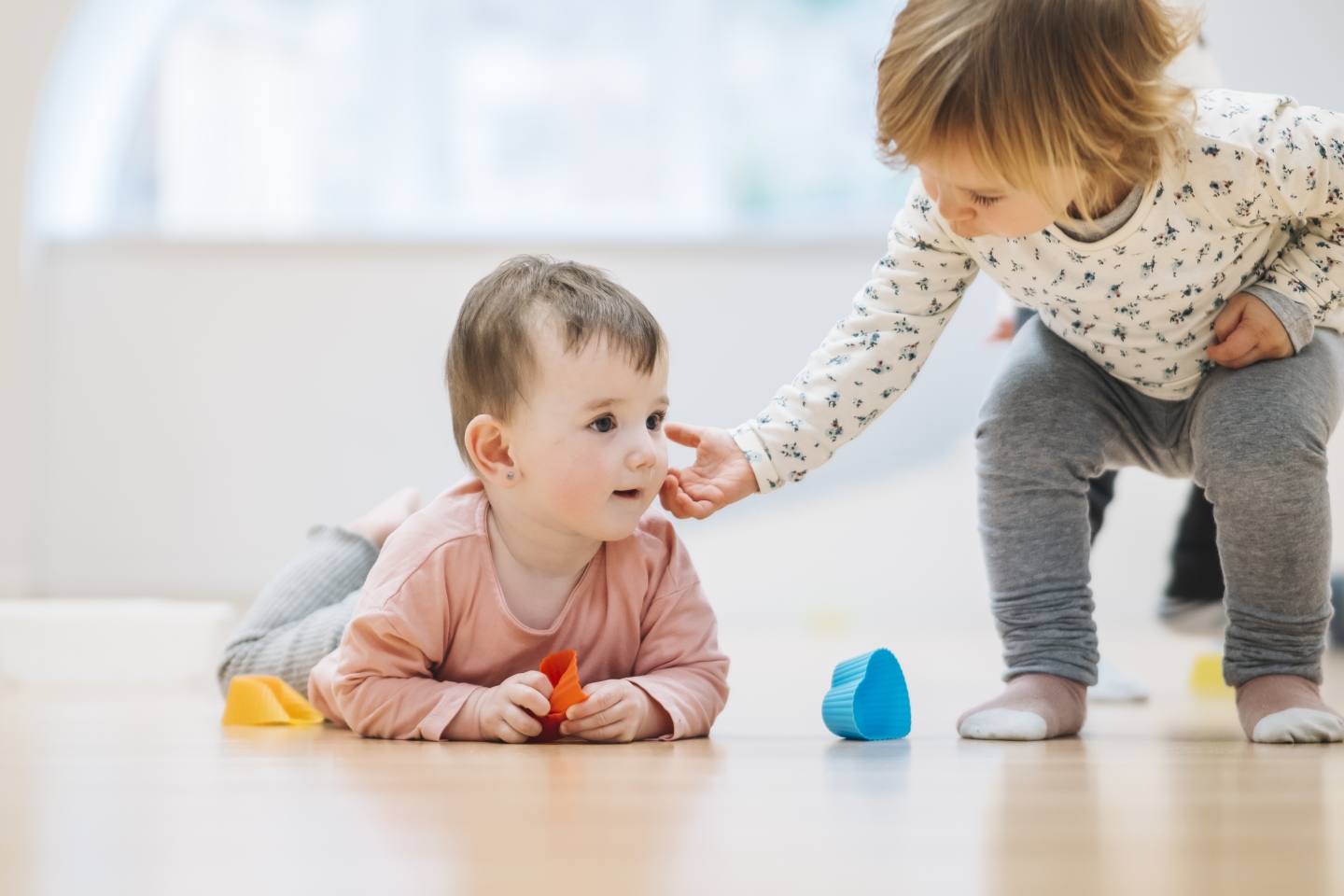
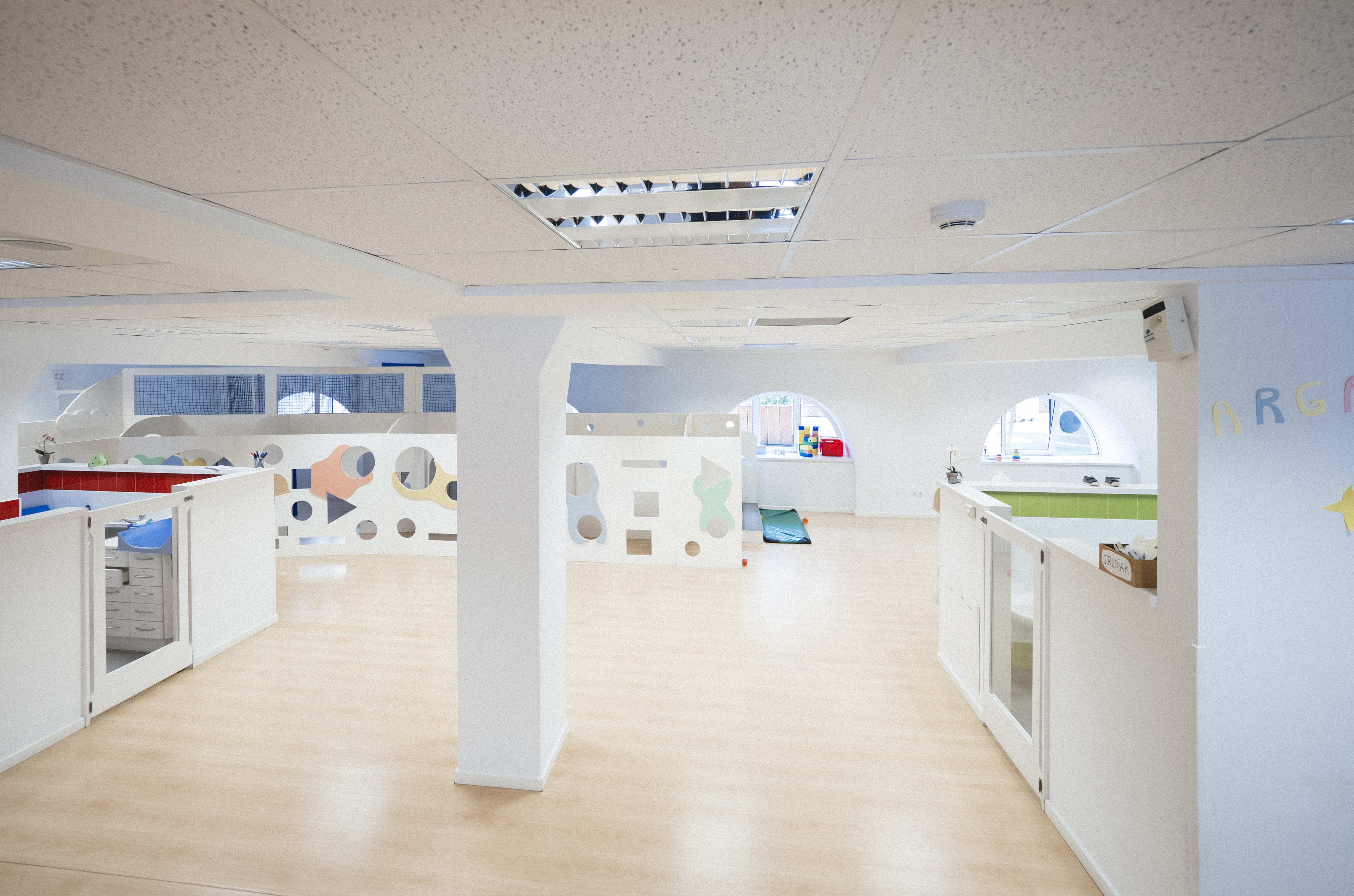
Children in EI 0 and EI 1 share the same space, and their interactions greatly enrich the development process. Through imitation, the youngest children learn from the older ones, while the older children internalise concepts of care. They have a spacious environment available to them, and through daily routines, children assign a specific function to each area of the space —one that can be built and rebuilt. In other words, even though there are no physical boundaries, they clearly distinguish the dining area, the story corner, spaces for movement, calm areas, and so on.
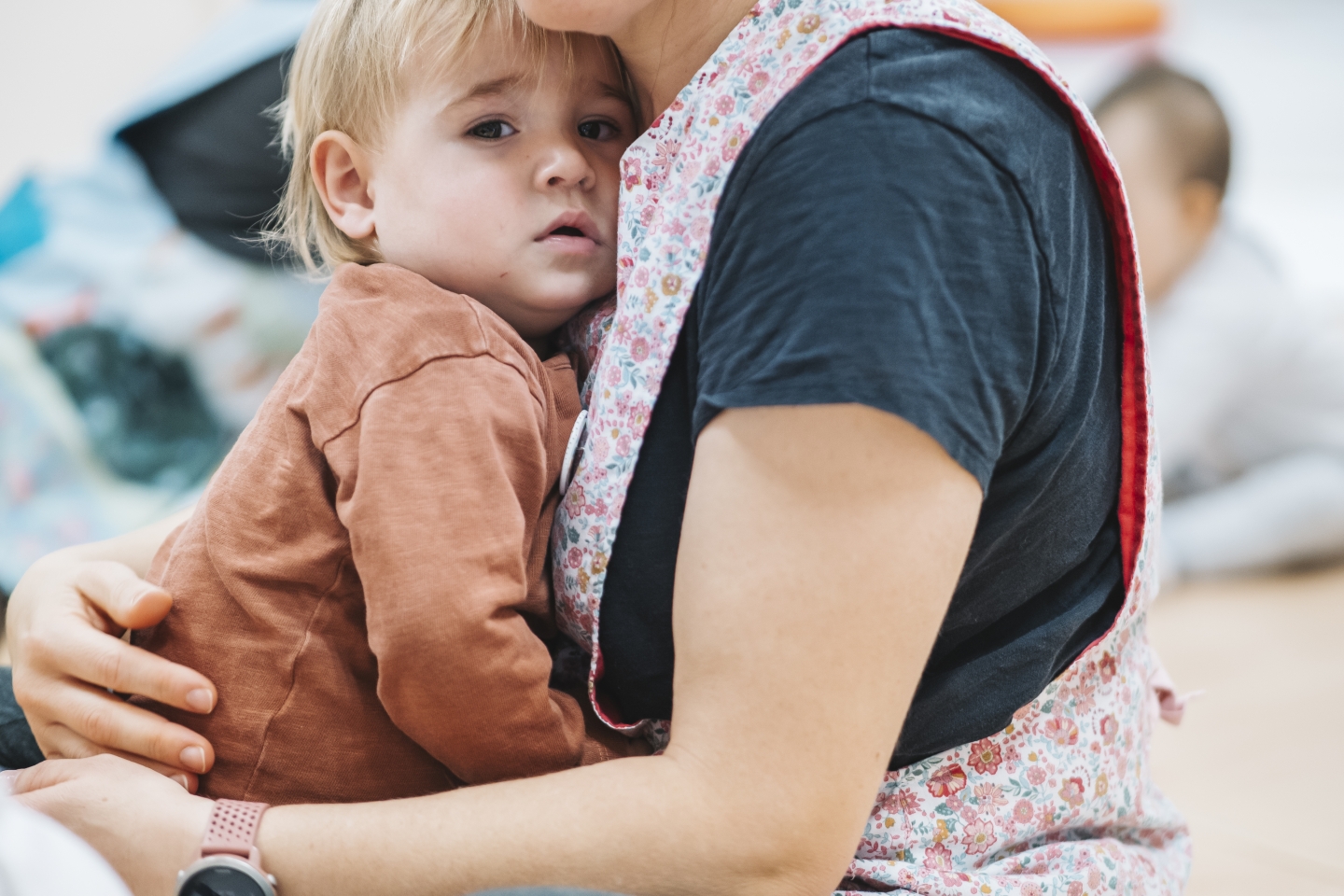
Children develop their autonomous activity without direct adult intervention. Educators, in turn, provide them with emotional and affective security, so that they can feel safe as they move through the space. We also carry out guided group activities —children’s literature, music, free dance...— and, when the weather allows, we offer the opportunity to explore outdoor spaces.
NATURAL DEVELOPMENT
Young children are able to gradually develop awareness of their own body and its movement. Indeed, balanced psychological, cognitive and emotional development goes hand in hand with balanced motor development.
That is why we offer respectful accompaniment as the child goes through the process of lying on their back on the floor, turning over, crawling, sitting up and walking. We do not force them into any body posture they have not achieved naturally.
SYMBOLIC PLAY
When we give children toys with a very specific design —work tools, toy cups and plates, cars with lights and sounds, and so on— symbolic play is not being created; instead, literal play is created, in which they simply imitate adults.
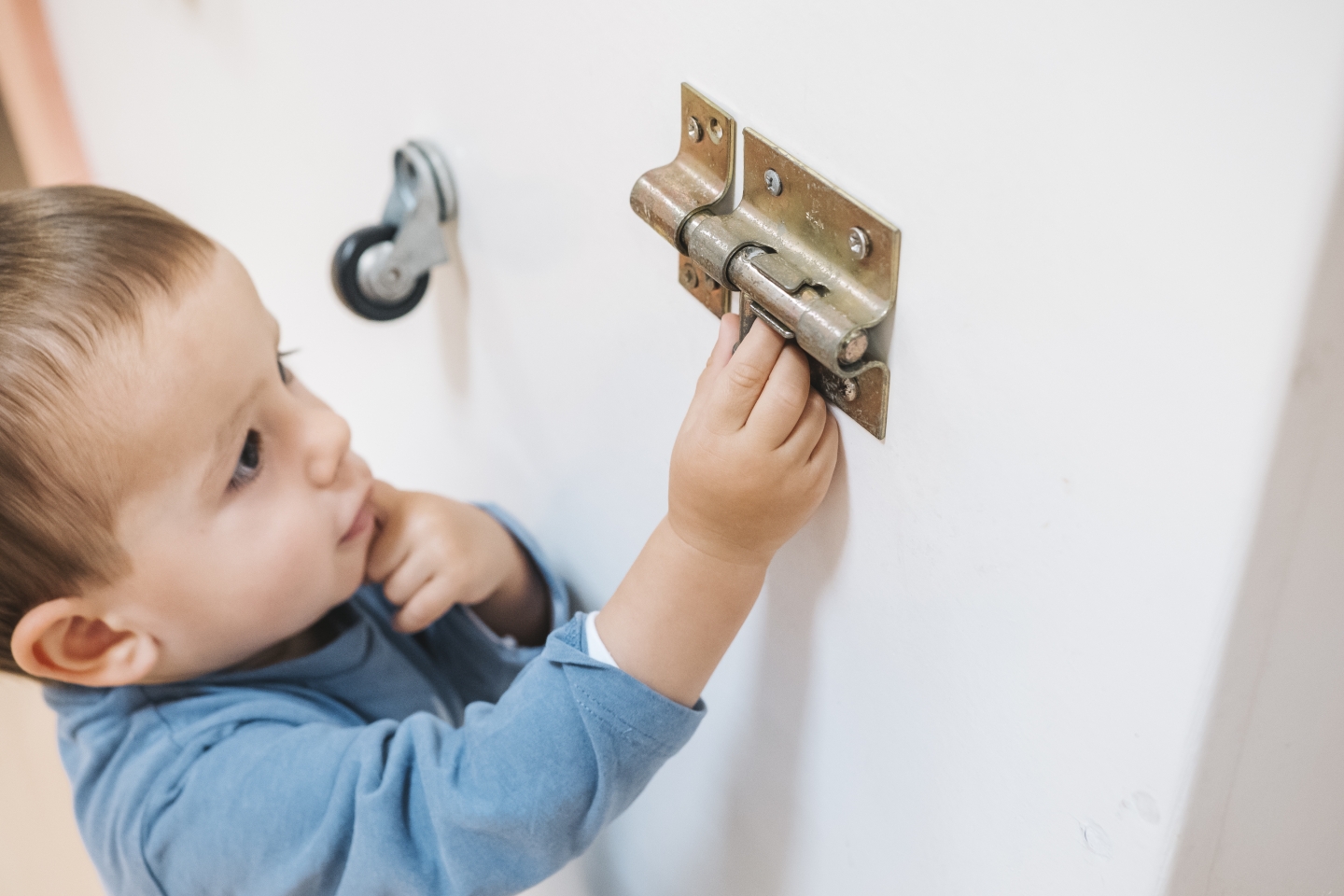
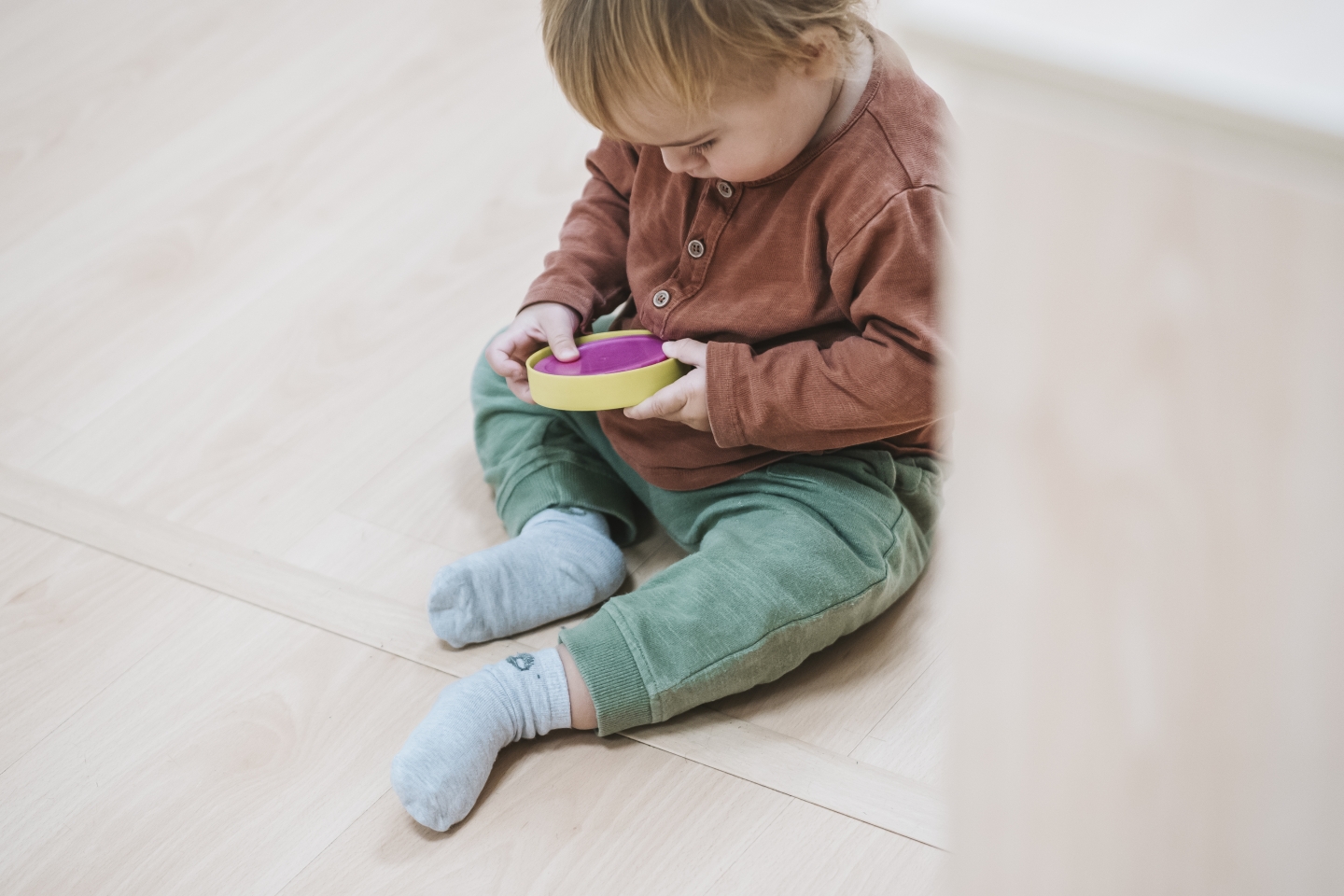
Symbolic play emerges when the child recreates something different with a material, toy or object; for example, when they play cars with stones, turn those stones into coins, or give pieces of wood the value of an iron...
That is why in the nursery school we do not have play houses, kitchens or similar elements. It is a conscious pedagogical choice, because we believe in the benefits of symbolic play:
- It stimulates creative thinking: these types of objects do not have a clear function, so the child must give them a purpose and create the stories they want.
- They adapt to the child’s developmental stage: as these materials do not have a specific purpose and are not highly elaborate, they will accompany the child for more years, adapting to their development and changing interests.
- They avoid overstimulation: there are no lights and no sounds, so there are no external stimuli; the child must create them themselves.
When the child begins to develop the ability for symbolic play —around 18 months—, they will find constructions without a specific definition at the Ikastola, and will have access to materials with no fixed shape or function. The more unstructured materials and objects there are in the space, the more opportunities the child will have to build creative and imaginative play.
In order to support children’s natural development, appropriate facilities and materials are essential. The structure and resources of the nursery school are designed to achieve this aim.
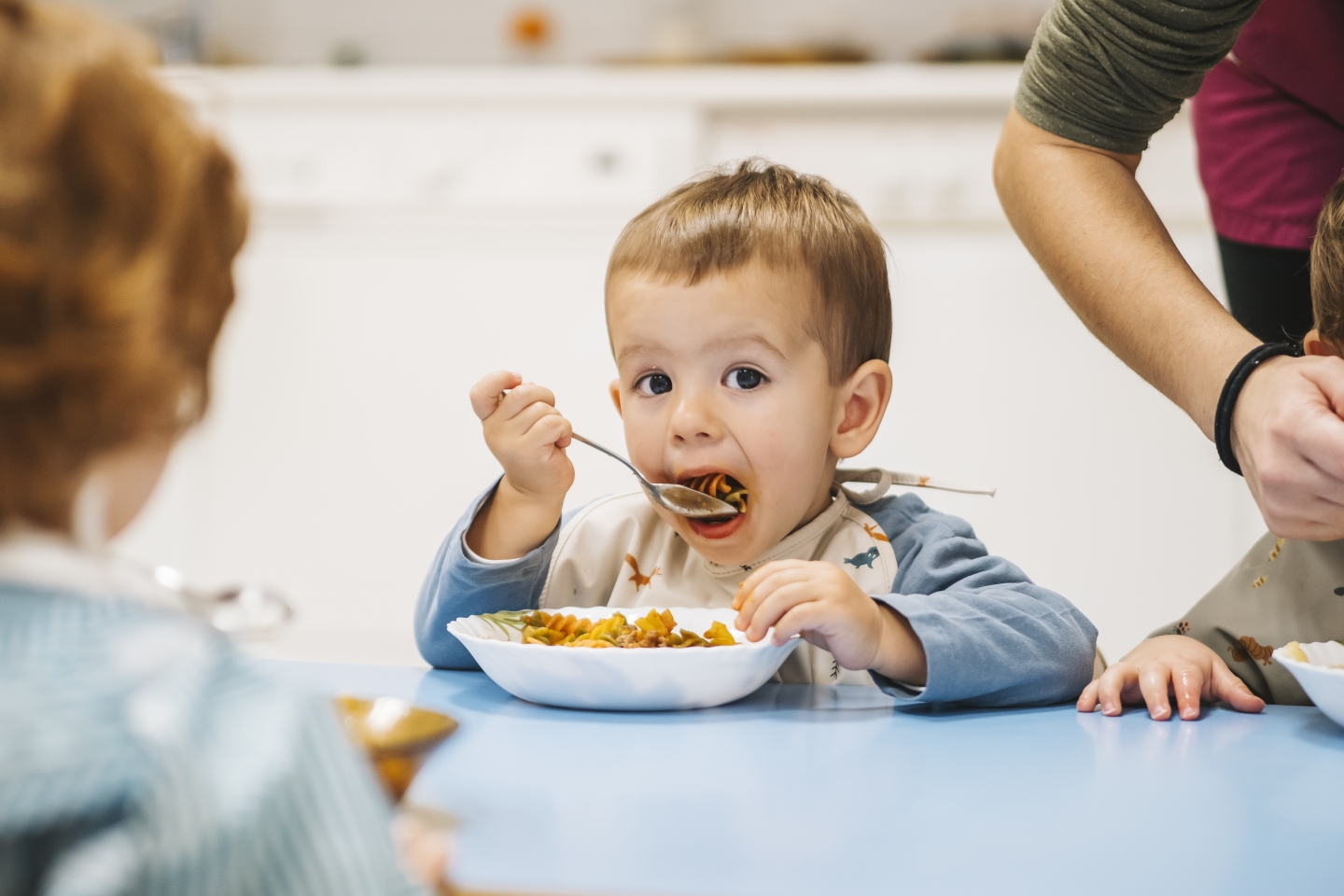
MEALTIMES
Mealtimes are very important moments of care. We experience them as pleasant moments, based on trust and calm.
Families bring food from home for their child. This ensures that the family can continue their home eating habits, and we approach this process with respect.
Depending on their age, children eat in groups: the youngest have their bottle while lying in the educators’ arms; those who have learned to sit up by themselves sit in a high chair; and those with greater autonomy eat together around the table, in a small group. We encourage them to eat autonomously, but with limits: food is not a game.
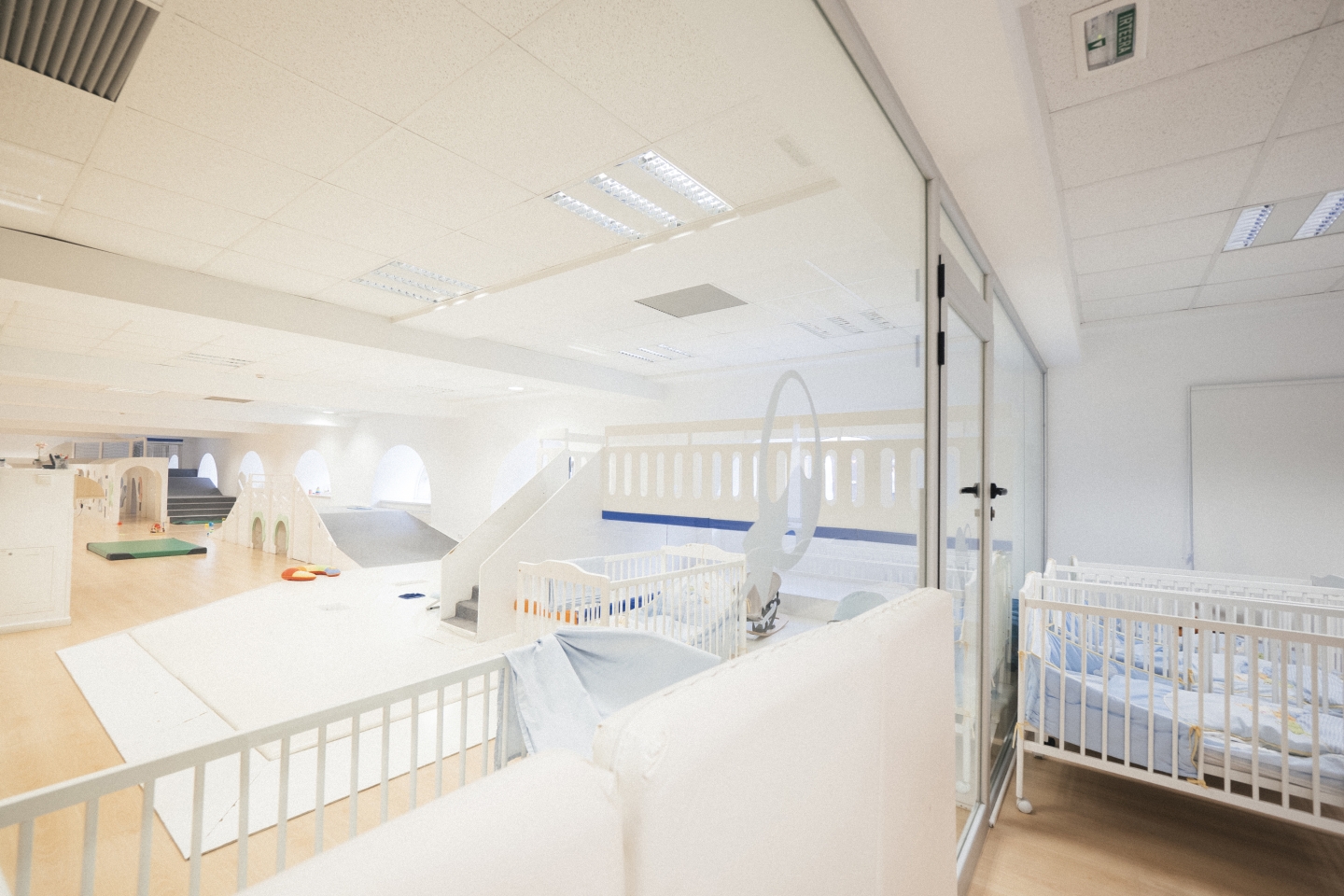
SLEEP
Rest times are essential for the child’s development. We adapt this moment of care to the needs of the little ones, and we share it with the family.
We have a cot room to separate the sleeping area from the rest of the space. When it is time to fall asleep, we offer respectful accompaniment and take into account each child’s own ways and rhythms.
Although ratios are set by the Department of Education, the Ikastola gives priority at this stage to having as many educators as necessary.
This school year, for example, we have had one educator for every 5-6 children. This is one of the measures we take to guarantee quality.

CALENDAR AND TIMETABLE
From the point of view of service for families, we offer a flexible calendar and timetable. The nursery school is open every day from 7:00 to 19:00, and each family decides which timetable suits them best. We also offer the same service during the winter and spring holidays and in July —the timetable is adapted to families’ needs.
In addition to providing quality education, the Ikastola also aims to support families in balancing work and family life. Alongside the regulated school offer, services are an essential line of work, as the society we live in places this reality directly before us. Therefore, complementary extracurricular pedagogical activities and flexible services are important to us.

Families and educators have daily face-to-face contact when entering and leaving the Ikastola. We also share a daily diary with information from home and from the Ikastola.
In addition, twice during the school year we provide families with development reports, and we also hold face-to-face meetings whenever either educators or families see the need.