The Secondary Education stage welcomes students aged 12 to 16. We offer competence-based learning, moving from the paradigm of knowing to the paradigm of using.
We place learning in situations from the immediate environment, with the aim of developing students’ key competences. We use our own teaching materials, structured around the Basque Curriculum.
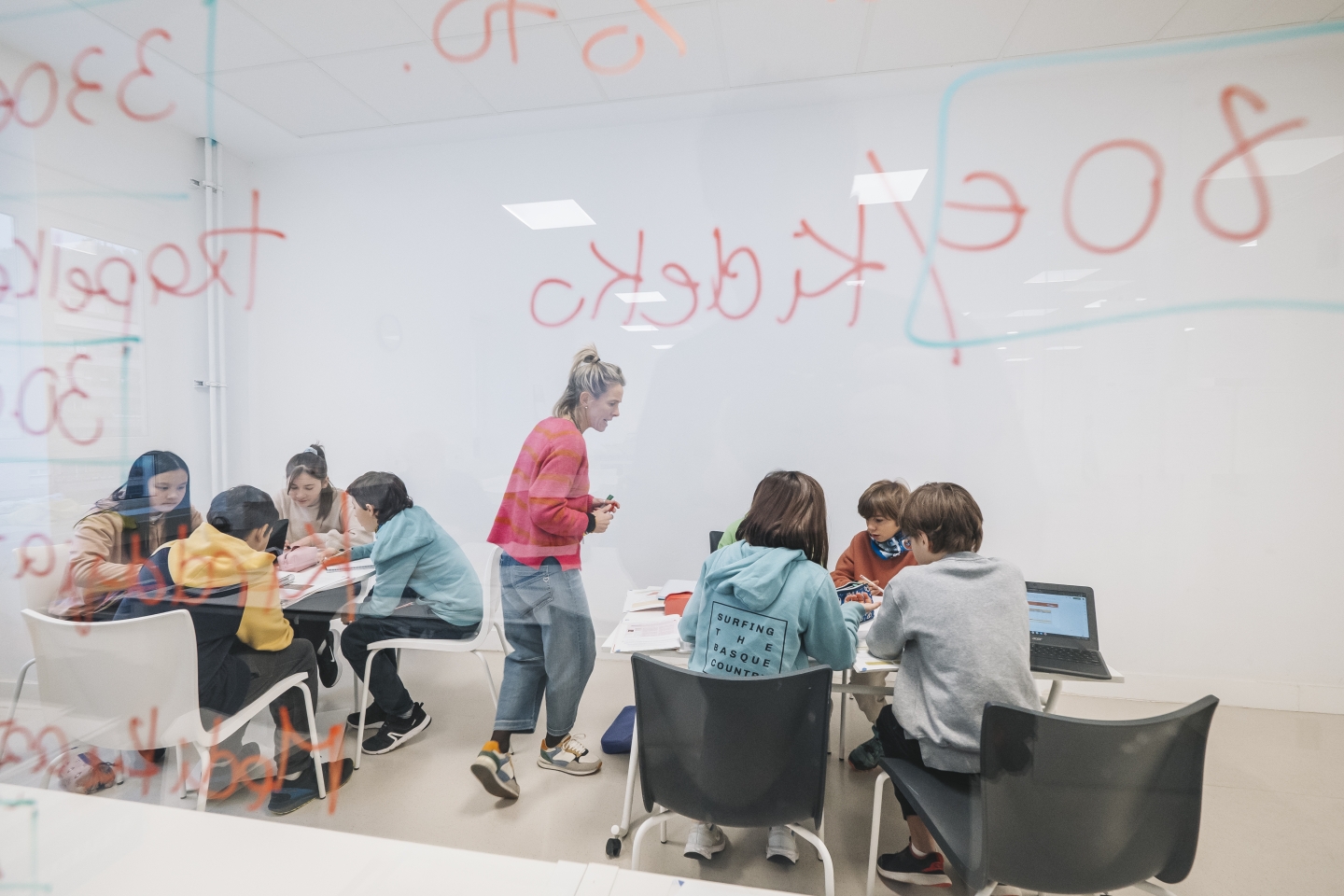
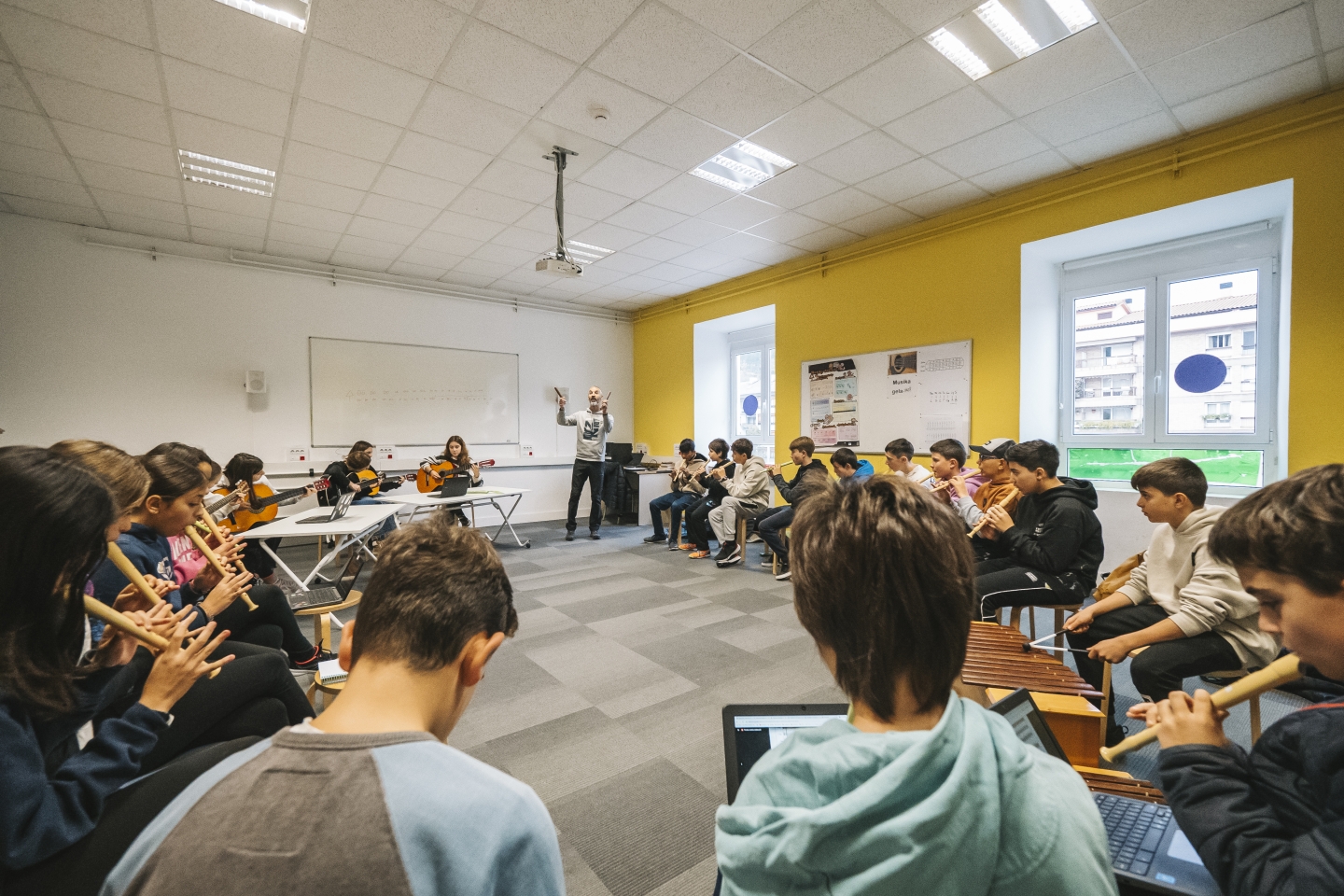
In Secondary Education, we continue the learning methodology activated in the final cycle of Primary Education. Curricular work takes on greater weight, but the learning experiences are based on the same framework.
Learning is placed in the student’s immediate environment, and each learning situation is centred on a specific area of interest. Students are presented with a learning situation, and to solve it they must work on competences from different disciplines as well as key competences. Along this path, we foster creativity and discussion, awakening students’ curiosity.
INTERDISCIPLINARY PROJECTS
In real life, the most common way to solve problem situations is by applying different skills or types of knowledge together. This is precisely the path towards becoming a competent person. That is why the learning process must also be interdisciplinary: we must not only acquire knowledge, but also learn to apply it by combining it.
Along this path, in most areas we use EKI teaching materials, created by Ikastolen Elkartea and based on the Basque Curriculum, competences and the Pedagogy of Integration. At the same time, we carry out and assess interdisciplinary situations, both throughout the term and in the final phase. For example: Basque-Social Sciences, Mathematics-Basque, Natural Sciences-Social Sciences...
HEDATZE
Hedatze is a programme that extends students’ school timetable and offers complementary activities. Its main aim is precisely to provide all students with the means to achieve school success.
Students follow their usual school schedule from 8:00 to 14:00, and in the afternoons they have access to a different offer, managed by the same teaching team: reinforcement classes to receive personalised individual attention, Basque language reinforcement, a workshop on study techniques and other dynamics —such as the Ikastola volleyball team, for example—.
COOPERATIVE LEARNING
The methodology we use includes within itself the challenge of working as a team. Cooperation is an essential path for social transformation, and we apply it systematically.
INNER STRENGTH
Adolescence is often a period full of ups and downs, and we place great importance on ways to strengthen confidence and self-esteem.
Continuing the path of Early Childhood and Primary Education, our aim is to educate euskaldun, entrepreneurial and decisive, cooperative and transformative people with inner strength, so that they may develop this value system throughout their lives.
FORMATIVE ASSESSMENT
We understand assessment as a continuous process, as it is a means to improve students’ learning process. But how does a student become the owner of their own learning process? No one has a magic key, but in our case we follow several guidelines to move closer to that reality:
- We present the objectives and competences to students in advance.
- We apply continuous assessment of competences.
- We assess through rubrics.
- We assess knowledge and competences through rubrics.
- Throughout the learning process, we provide them with quality feedback, both orally and in writing.
- We use a wide range of assessment tools: presentations, group work, exams, exercises...
- Students carry out self-assessment, as well as peer assessment.
- We establish four levels of achievement: low, basic, appropriate and excellent.
GUIDANCE
Academic guidance becomes especially important in the second cycle of Secondary Education. When facing decisions about the future, we offer both group work and a personalised service, led by the tutor and the guidance counsellor.
In Years 3 and 4 of Secondary Education, students begin to specialise in a specific learning pathway. The process of making that choice must be carefully supported, maintaining a balance between emotions and expectations. Along this path, we transmit confidence and security, and offer them resources to make decisions.
In addition to working on specific programmes, in Year 3 we begin working with students on academic guidance. Visits are often useful tools for this: to companies, service sectors, work experiences in the primary sector, study centres...

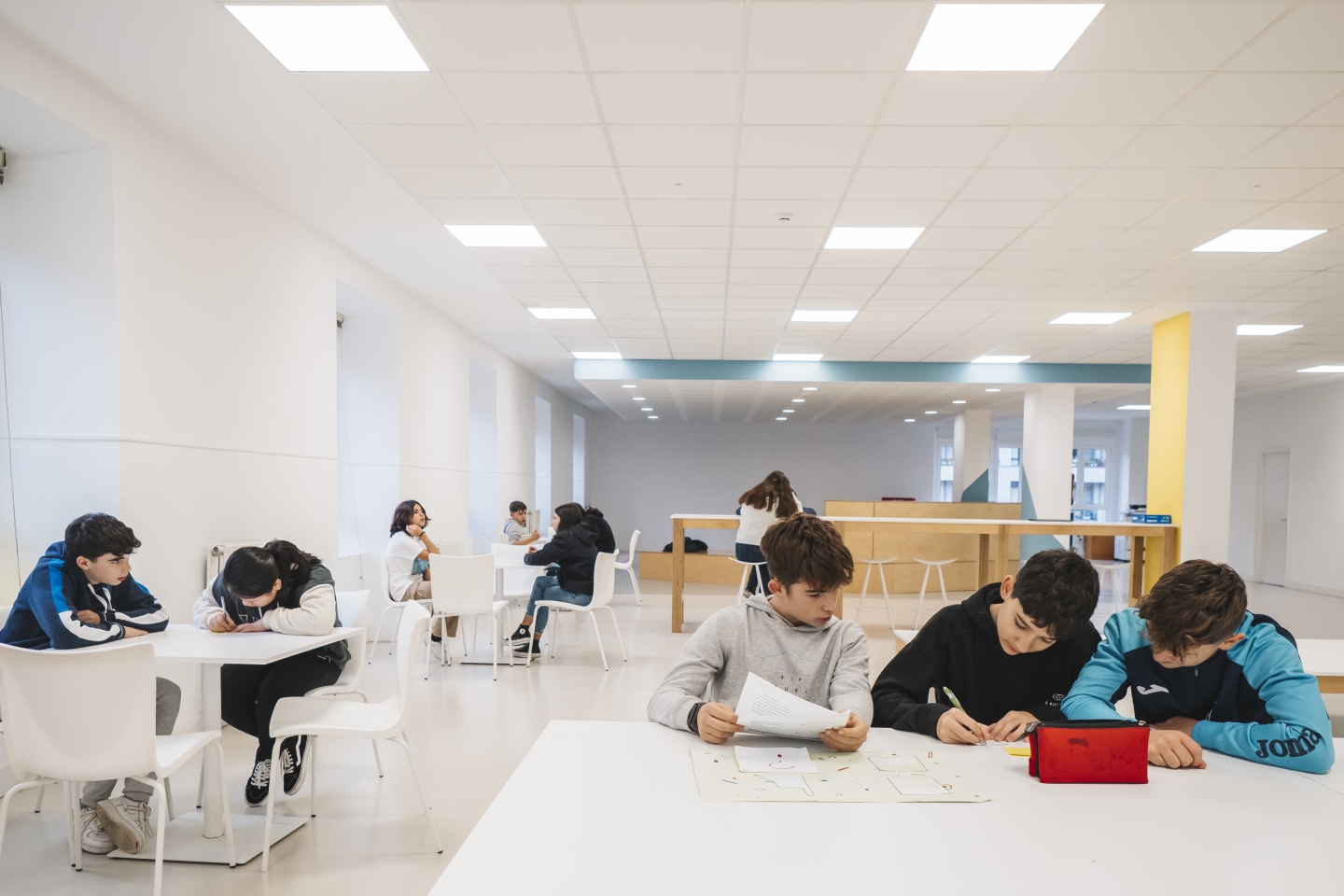
We live in a changing and complex society, and this brings new challenges in the field of education. Students’ wellbeing, personal development and socialisation require increasing attention. In this context, the ONKI programme was created: a line of work based on the new Ikastolen Tutoring Framework, as part of a comprehensive and coherent education. The ONKI programme is a powerful tool to ensure the development of inner strength, created to promote students’ wellbeing and holistic development. By building relationships based on trust, safety and health, it creates a meeting space between teachers, students and families, a space of trust for living together.
It places students’ transformation at the centre and promotes, among other things, emotional management, active listening, agreement on rules for coexistence and a sense of belonging to the group. The aim is not only to prevent bullying; it is to ensure students’ self-knowledge and social and emotional development, offering them tools for a full and balanced life. The ONKI programme is an opportunity to develop tools for a full and balanced life and to anticipate and prevent different life situations.