Children reach their greatest developmental potential during the first six years of life. At this stage, they begin to develop their intellectual abilities, personality traits, physical capacities, and the foundations for socialisation and relationships. That is why we work with the hIZAN pedagogical project, based on the Pedagogy of Trust.
Children need trust in order to feel safe with themselves and with those around them, and that security enables them to broaden their knowledge and learning. In this way, they not only internalise the skills they have worked on, but also use them to respond effectively to real-life situations.
METHODOLOGY
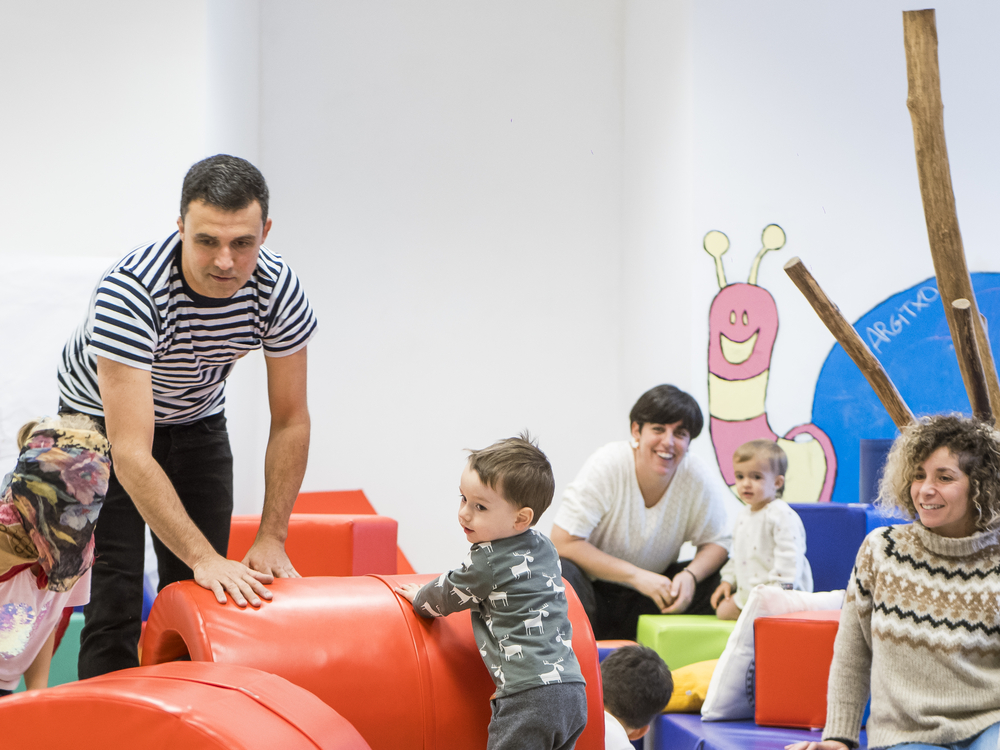
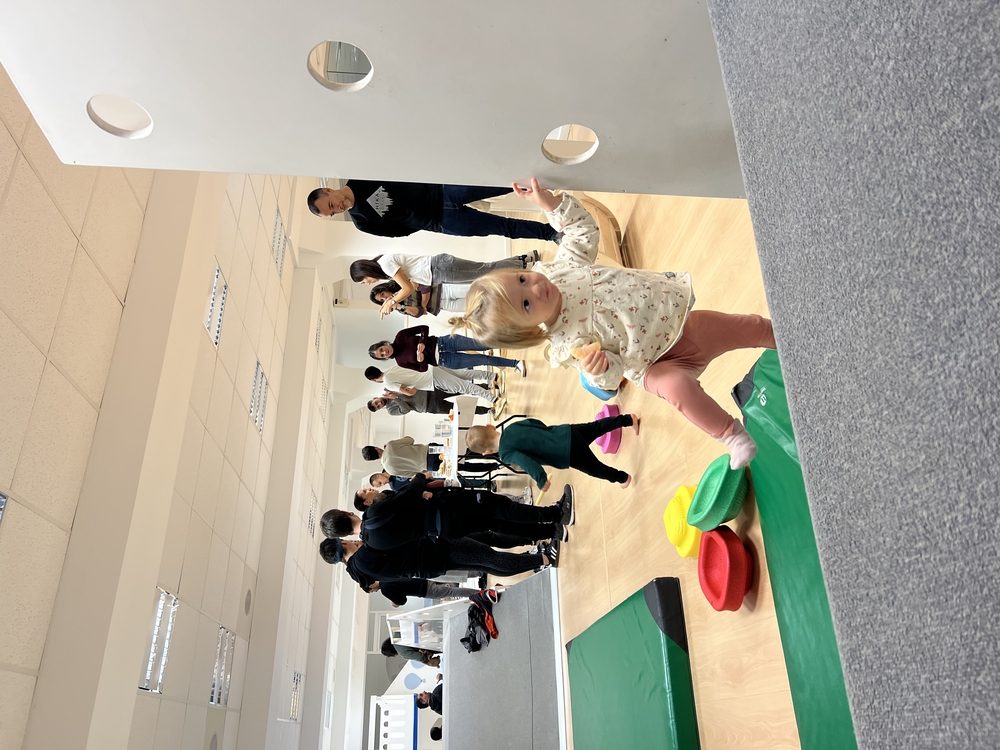
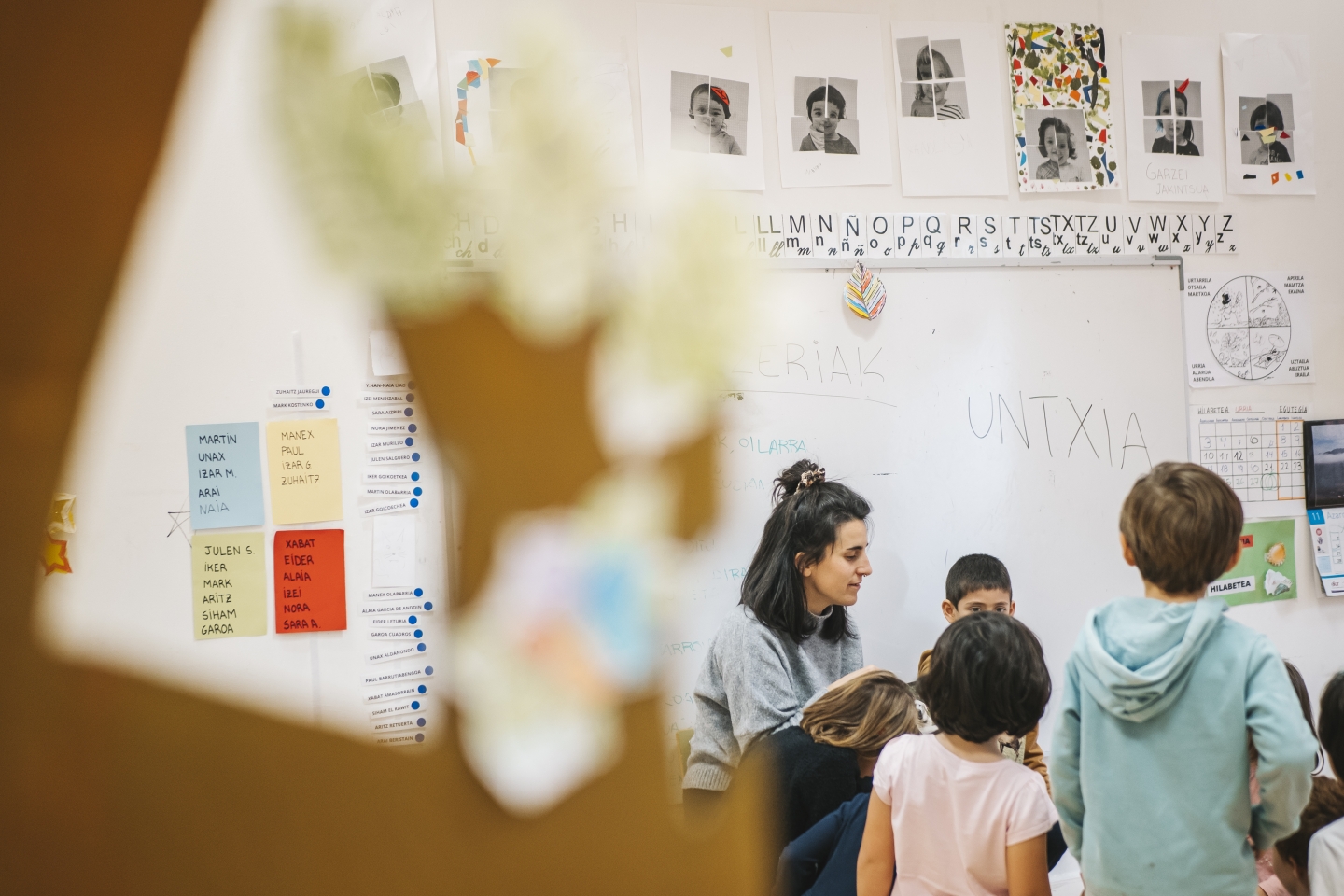
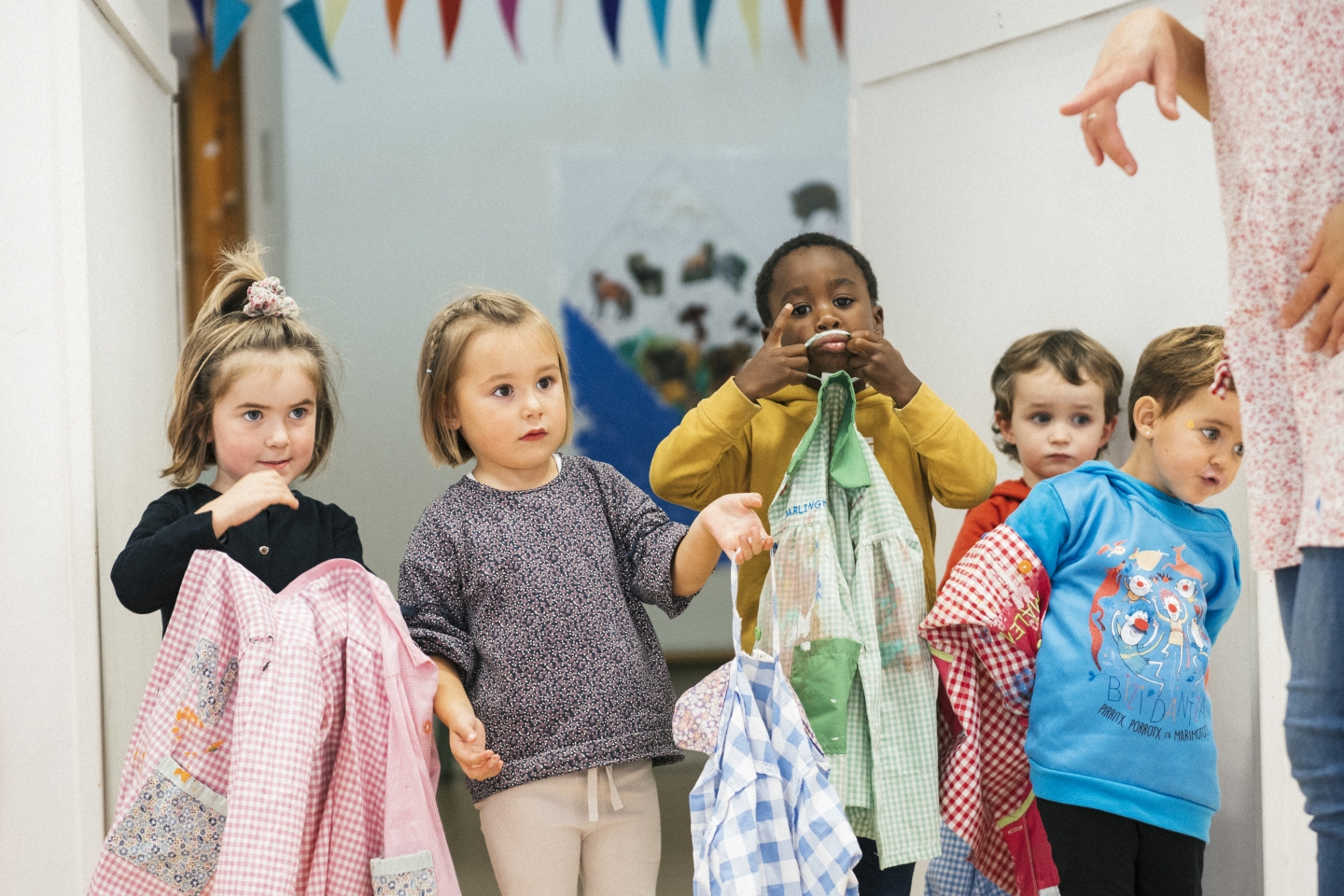
At the beginning of the morning, children have time for autonomous circulation. This is an important space that allows children to connect with the needs they have at that moment at the start of the day. Those who need movement have access to the constructions in the corridors, the slide and the stairs, for example. Those who need calm or time to look inward have suitable spaces for that purpose: quiet corners, the library, manipulative materials...
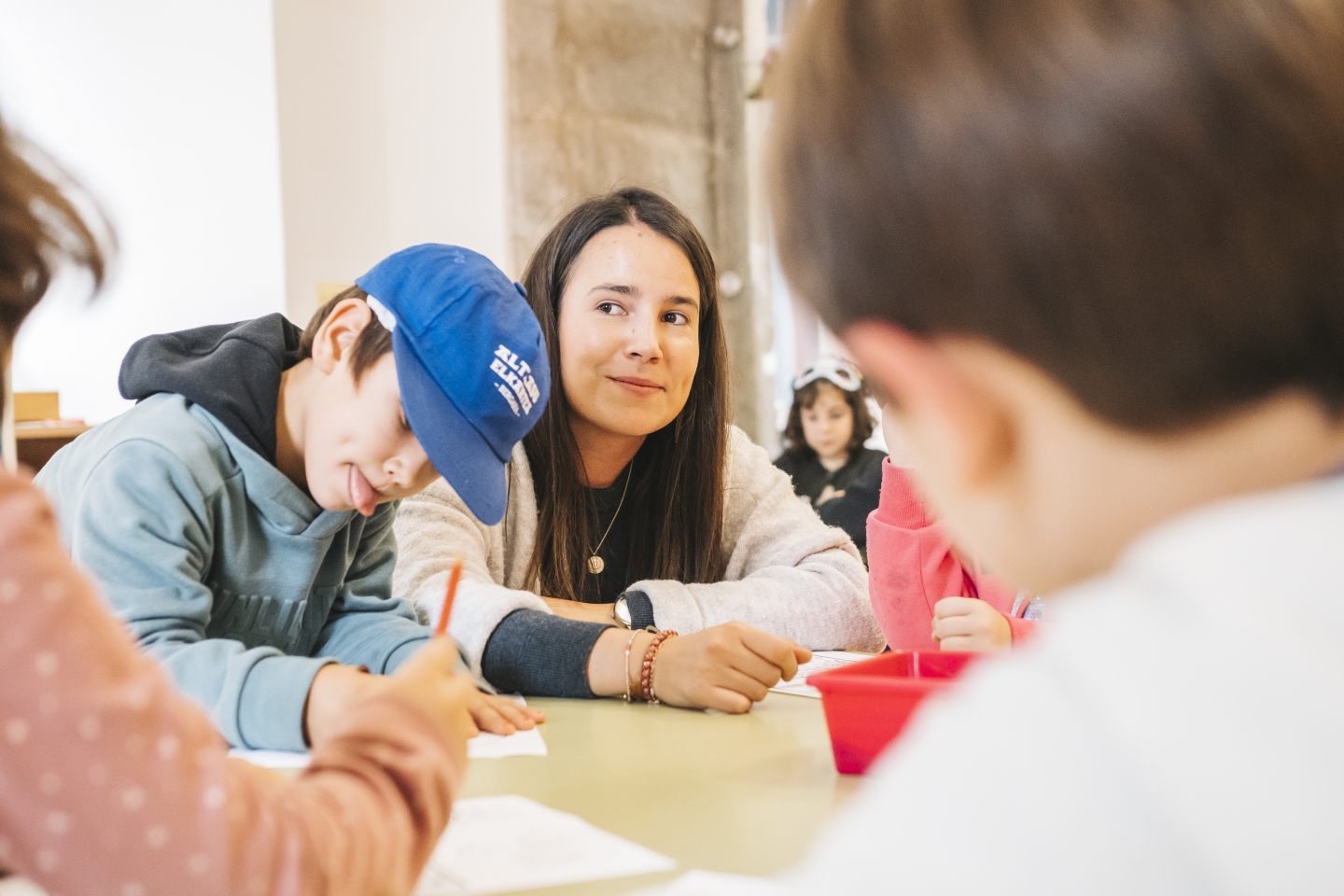
Through the pedagogical practice we develop every day, we work on multiple intelligences. Our spaces are organised into areas, and each area is equipped with materials to develop a specific intelligence. Children decide which area they want to take part in according to their interests, and the teacher acts as a companion, offering means to support their comprehensive development —the adult’s gaze—.
In addition, we work through projects. We design our own projects across different disciplines and intelligences, starting from children’s interests. These projects are used to work on specific pedagogical goals and have a strong impact on children’s motivation. We connect with the time of year and the topic, and children overcome various challenges along their learning journey.
Interaction between different ages is very important in our way of working. It is not a goal in itself, but rather a means to achieve the aims we pursue. Therefore, the teaching team decides when and how interaction between ages takes place. For example, it is guaranteed every day during autonomous circulation time —from Monday to Thursday by cycle, and on Fridays all together—, as well as during the mid-morning snack time —with students in Year 6 of Primary Education—. In addition, we often share science-related projects with students from Primary and Secondary Education, as well as projects linked to the Basque language and oral expression.
Each learning group has two reference adults, as shared tutoring allows us both to observe the child more comprehensively and to build the relationship between child and adult from different perspectives.
We have a young and stable teaching team, deeply committed to the project. It is essential for the relationship between teacher and child to be strong and of high quality, as the process of starting school can be complex for children. At the same time, it is not always easy for families either, and we need to walk that path together.
Having a stable reference adult helps greatly to create a favourable situation and transmits security to the child.
In order for children to experience harmonious development, psychomotricity works on play, free expression and spontaneity.
EDUCATIONAL PSYCHOMOTRICITY
Every single child aged 2, 3, 4 and 5 at the Ikastola has a weekly educational psychomotricity session during school hours, with a professional psychomotrician.
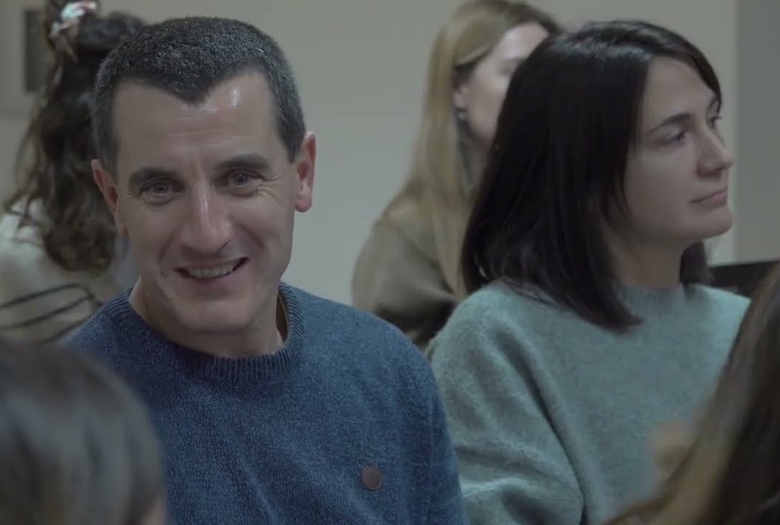
At present, within the Early Childhood and Primary Education teaching team, we have three educational psychomotricians and one therapeutic psychomotrician, and three other teachers are undertaking this training at Luzaro school. [The video you can see was recorded in 2023]
The practice of psychomotricity has three main objectives: firstly, to help the child open up to the world through communication and relationships. Secondly, to give the child the opportunity to build and experience a creative world through play. And finally, to offer resources so that children can experience an autonomous growth process and build confidence in themselves.
The aim of psychomotricity practice is to offer children a carefully studied and prepared space, so that they can develop their own resources to address the psychological maturation processes needed for healthy development. In this space there is a professional with solid and rigorous training in different attitudes, in children’s movement and play, as well as in their understanding and meaning.
MID-MORNING SNACK
Children in Early Childhood Education and in the first cycle of Primary Education take part in an inclusive mid-morning snack dynamic. The Ikastola manages this meal, and the children bring the project to life collectively.
Four days a week they eat seasonal organic fruit, and once a week wholemeal bread with extra virgin olive oil. We receive all these foods through Elikaenea and Errigora, who are responsible for establishing direct relationships with nearby small producers and guaranteeing supply. Local fruit —except citrus fruits—, artisan bread from Arrasate, oil from Navarre... are among the products we have.
This project has several goals, but one is the main one: for all children to share the same mid-morning snack, leaving social and economic differences behind. This aim fully aligns with the principle of children’s right to food. In addition, we want to influence children’s autonomy; that is why the children themselves are responsible for the whole process —collecting the food, distributing it to the classrooms, washing the fruit, tidying everything up...—. At the same time, we have chosen to promote healthy meals and to support local development, joining the movement in favour of agroecology.
No screens in Early Childhood Education, for the benefit of learning processes and development. Indeed, screens have a direct impact on language development, attention and relationships.
There are no screen-based technology systems in Early Childhood spaces. It is a conscious pedagogical choice, unanimously agreed by the professional team.
KUKU! EMOTIONS PROGRAMME
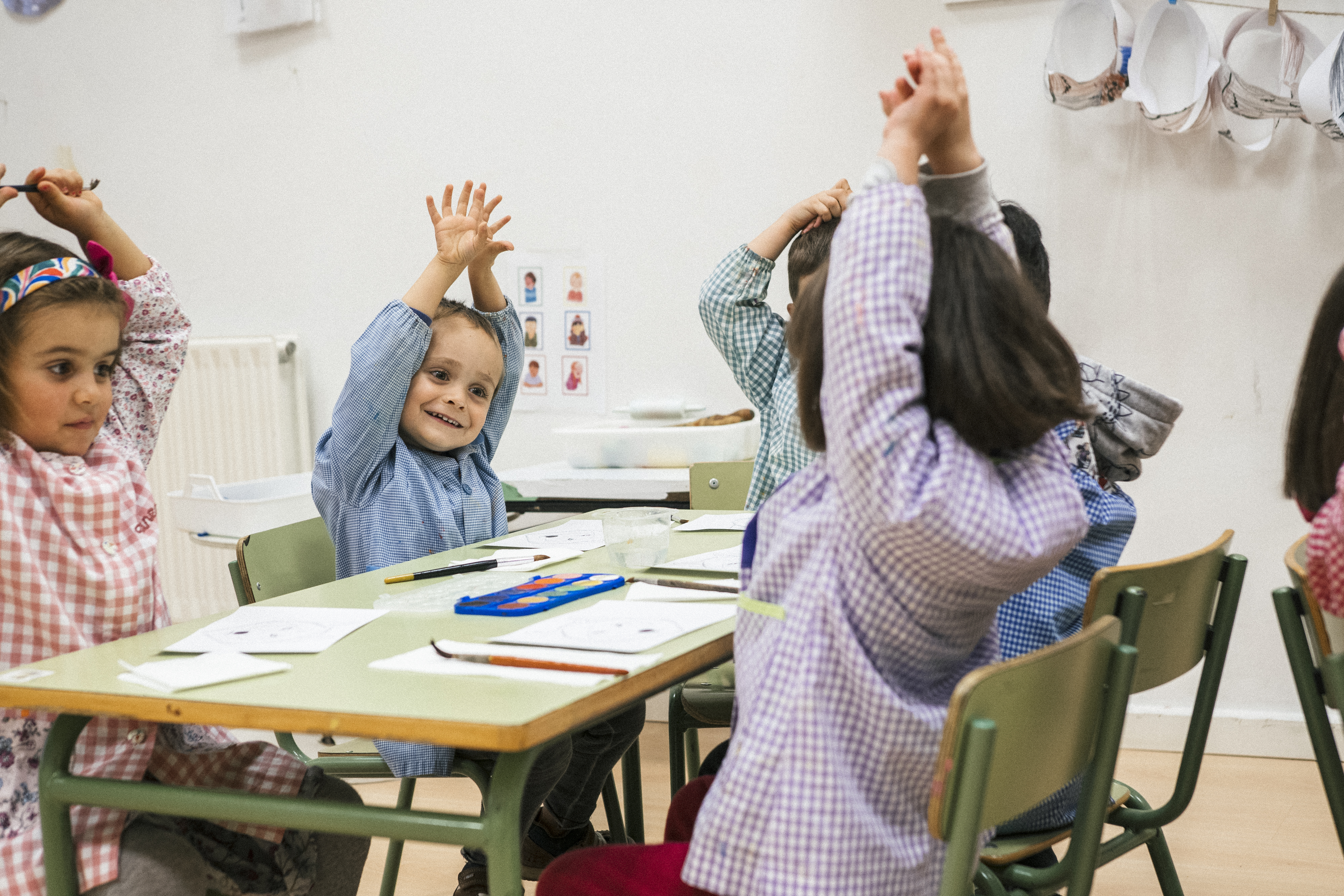
The aim of this programme is to learn to recognise, express and manage one’s own emotions. Indeed, by understanding our own emotions, we will also better understand those of others. It offers strategies and resources to help create contexts in which people can also be emotionally intelligent. These resources are also useful in many different settings, both at school and at home.
It is based on oral expression, and can be developed both in groups and through autonomous activity. It offers illustrated albums to touch, smell and feel, murals, music, games and audiovisual materials. All these resources have been created to be used in different moments, situations, spaces and ages, and are based on six basic emotions: joy, fear, sadness, anger, surprise and disgust.
The programme has a 360-degree approach, as working on emotions requires just that. It includes materials for children, teachers and families.
ENGLISH
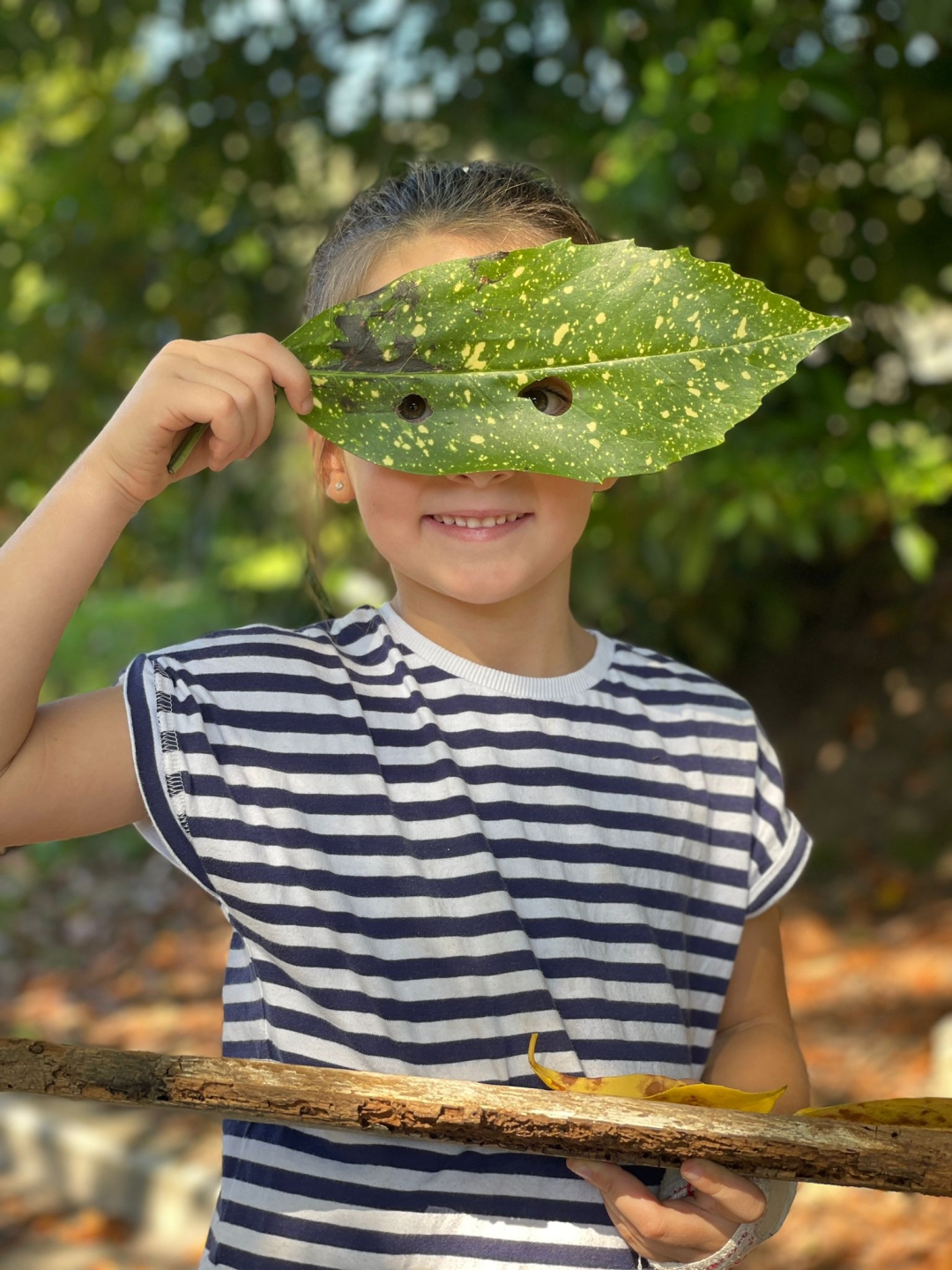
At Aranzadi Ikastola, children begin to acquire their first knowledge of English at the age of 4. We do this in a playful way, integrated into the areas for developing intelligences, and the sessions are led by a specialist teacher.
During the child’s first six years, mastering their mother tongue(s) is of great importance, and we consider it essential to take care of that process. Oral expression and comprehension are very important areas for comprehensive development, and the mother tongue plays a key role on that path —a successful process developed through the mother tongue can be applied to other languages—.
We know that early English learning may create confusion in the development of some children. That is why we do it gradually and in an integrated way, encouraging children to have full command of their mother tongue before beginning English learning.
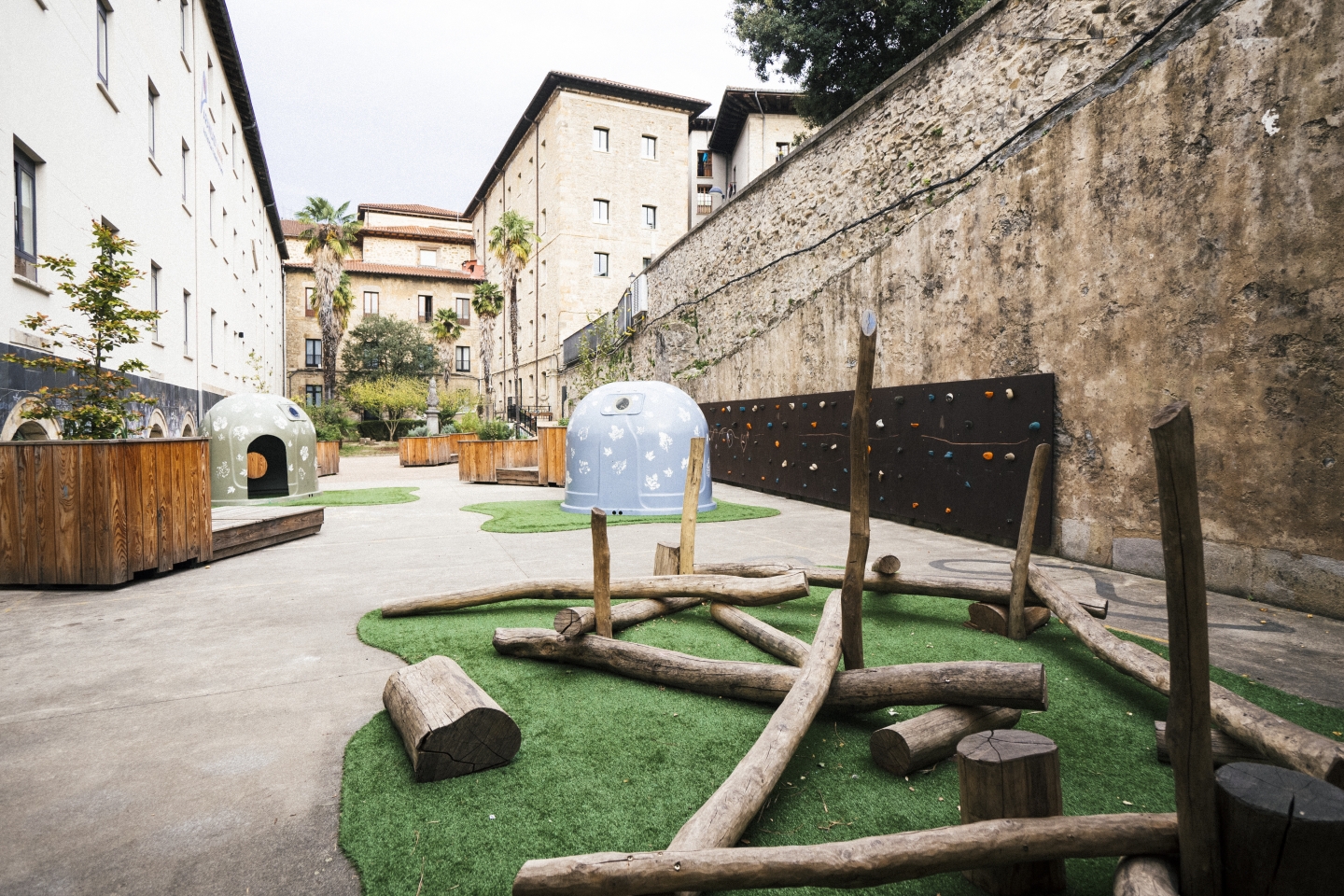
The town’s natural parks are a great treasure, and we make extensive use of them in our daily life, both to develop projects and to enjoy autonomous play.
Aranzadi’s location in the centre of Bergara allows us to integrate spaces beyond the Ikastola into our pedagogical practice.