The Primary Education stage welcomes students aged 6 to 12. The fundamental learning areas at this stage are reading, writing, oral competence, mathematics and the development of autonomy.
We place learning in situations from the immediate environment, with the aim of developing students’ key competences. To do so, we use our own teaching materials, structured around the Basque Curriculum.

KIMU YEARS 1-2-3
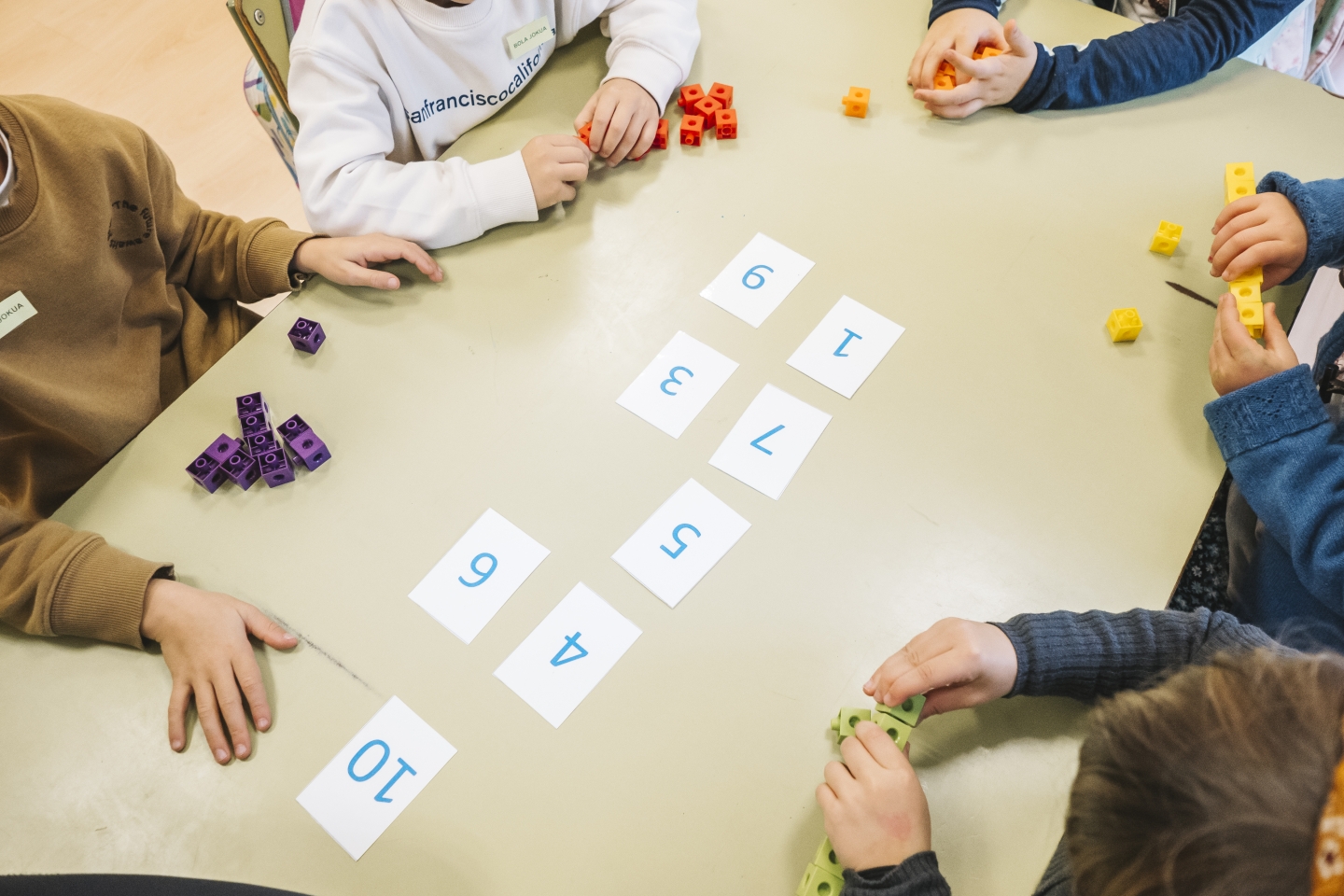
Kimu is a project aimed at the first three years of Primary Education. Years 1 and 2 are structured around three didactic proposals: Challenge, Basque Language and Literature, and Mathematics. In Year 3, Spanish Language and Literature is also added. The connection and complementarity between all of them are guaranteed, and they are based on manipulative materials.
CHALLENGE
Learning is placed in the student’s immediate environment, and each didactic unit is centred on a specific area of interest. Students are presented with a learning situation, and to solve it they must work on specific competences from different disciplines as well as key competences. Along this path, we foster creativity and discussion, awakening students’ curiosity. It is also based on a communicative approach to language.
BASQUE LANGUAGE AND LITERATURE
Reading and writing are especially important in Primary Education, particularly in the first cycle, as the foundations of communicative competence are established during these years. To learn to write and read, children must write and read, and see how others write and read; by trying and making mistakes, always searching for meaning in texts or creating texts that have meaning.
In addition, we attach great importance to literary education, and we base our work on children’s literature. Literary works created specifically for the Kimu project by leading writers and illustrators in Basque literature form the basis and starting point of the proposal.
MATHEMATICS
Starting from viewing the immediate reality through mathematical lenses, our aim is to identify and understand the role of mathematics in the world around us. Through play, research and observation, students develop mathematical competence. We use manipulation to help them understand concepts and procedures. The proposal is structured around five basic pillars: didactic units, challenges, routines, research and games.
SPANISH LANGUAGE AND LITERATURE
Students begin working on Spanish in Year 3 of Primary Education, once reading and writing have been consolidated in Basque —although we know this is an ongoing process. We work on reading comprehension and oral and written expression, and enrich vocabulary in order to speak and write correctly and formally. To do this, we use different text genres and communicative actions.
Continuing the practice developed in Early Childhood Education, in the first two years of Primary Education we also work on multiple intelligences through areas equipped with suitable materials.
Students in Years 1 and 2 carry out this dynamic together for four hours a week, as interaction between different ages enriches the learning process.
At this stage, we work on the solid foundations for the learning that people will develop throughout their lives.
MID-MORNING SNACK
Children in Years 1, 2 and 3 of Primary Education, together with those in Early Childhood Education, take part in the inclusive mid-morning snack dynamic. The Ikastola manages this meal, and the children bring the project to life collectively.
Four days a week they eat seasonal organic fruit, and once a week wholemeal bread with extra virgin olive oil. We receive all these foods through Elikaenea and Errigora, who are responsible for establishing direct relationships with nearby small producers and guaranteeing supply. Local fruit —except citrus fruits—, artisan bread from Arrasate, oil from Navarre... are among the products we have.
This project has several goals, but one is the main one: for all children to share the same mid-morning snack, leaving social and economic differences behind. This aim fully aligns with the principle of children’s right to food. In addition, we want to influence children’s autonomy; that is why the children themselves are responsible for the whole process —collecting the food, distributing it to the classrooms, washing the fruit, tidying everything up...—. At the same time, we have chosen to promote healthy meals and to support local development, joining the movement in favour of agroecology.
EKI YEARS 4-5-6
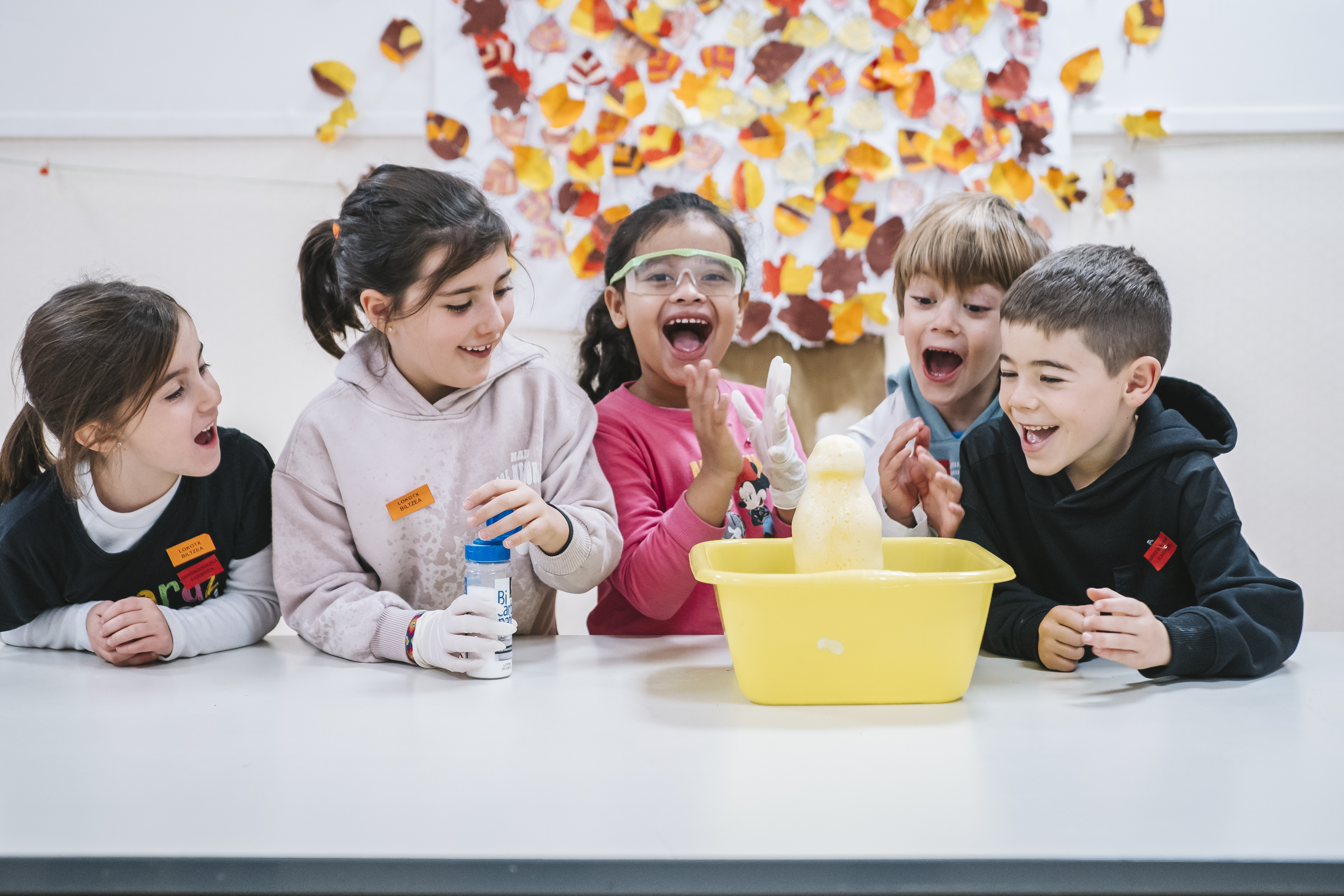
EKI is an interdisciplinary project: structured around the Basque Curriculum (E), based on competences (K) and embodied in the Pedagogy of Integration (I).
Competences are worked on, developed and assessed in real learning situations, and those situations require the resources developed in more than one discipline to be applied in an integrated way.
We carry out challenges to respond to situations individually and in groups, giving both ways of working the necessary space in the learning process. In this way, our aim is for each student to become the owner of their own learning journey; to support this, we offer self-correction and self-regulation activities.
FORMATIVE ASSESSMENT
We understand assessment as a continuous process, as it is a means to improve students’ learning process. But how does a student become the owner of their own learning process? No one has a magic key, but in our case we follow several guidelines to move closer to that reality:
- We present the objectives and competences to students in advance.
- We apply continuous assessment of competences.
- Throughout the learning process, we provide them with quality feedback, both orally and in writing.
- We use a wide range of assessment tools: presentations, group work, exams, exercises...
- Students carry out self-assessment, as well as peer assessment.
- We establish four levels of achievement: low, basic, appropriate and excellent.
DIGITALISATION
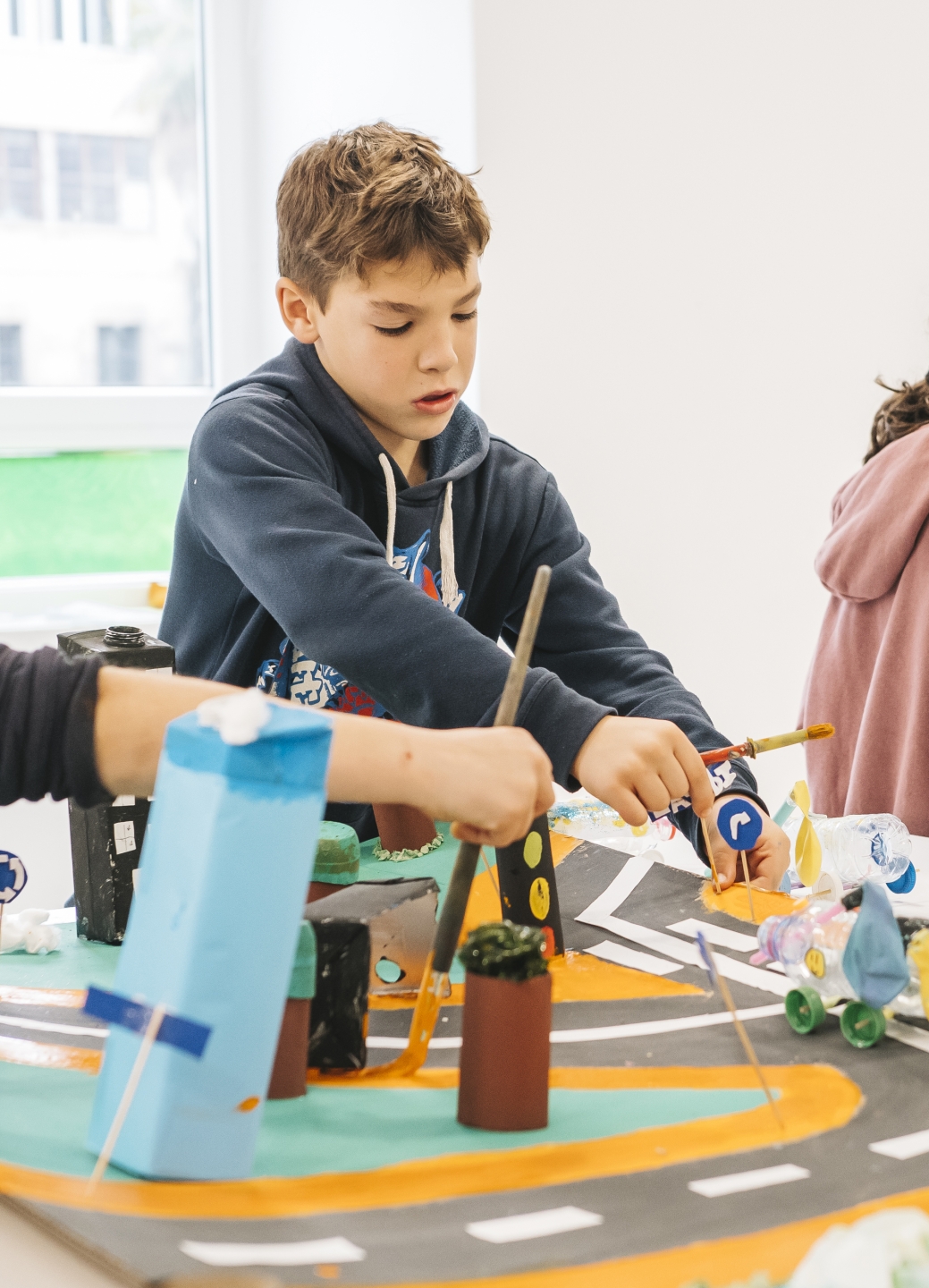
At Aranzadi Ikastola, students have their first contact with digital devices for the learning process in Year 4 of Primary Education. At that point, they begin to approach connected digital competence.
In Year 4, students work digitally for one hour a week —in the subject Computational Thinking. In Years 5 and 6, however, one subject —Natural Sciences— is developed digitally, because the characteristics of that area mean that digital resources enrich the learning process. Even so, they spend specifically four learning hours a week in front of a screen —Natural Sciences and Computational Thinking—, and they do not take the device home.
The Ikastola has two lines of work regarding this issue: on the one hand, promoting the safe and responsible use of digital devices that students use for the learning process. On the other, carrying out the tasks necessary to develop connected digital competence with the help of digital devices —always taking contexts into account. Thus, this last idea is directly related to the tendency in recent years to over-digitalise many areas of life, including education. To learn more about our Ikastola’s Digital Project, click here!
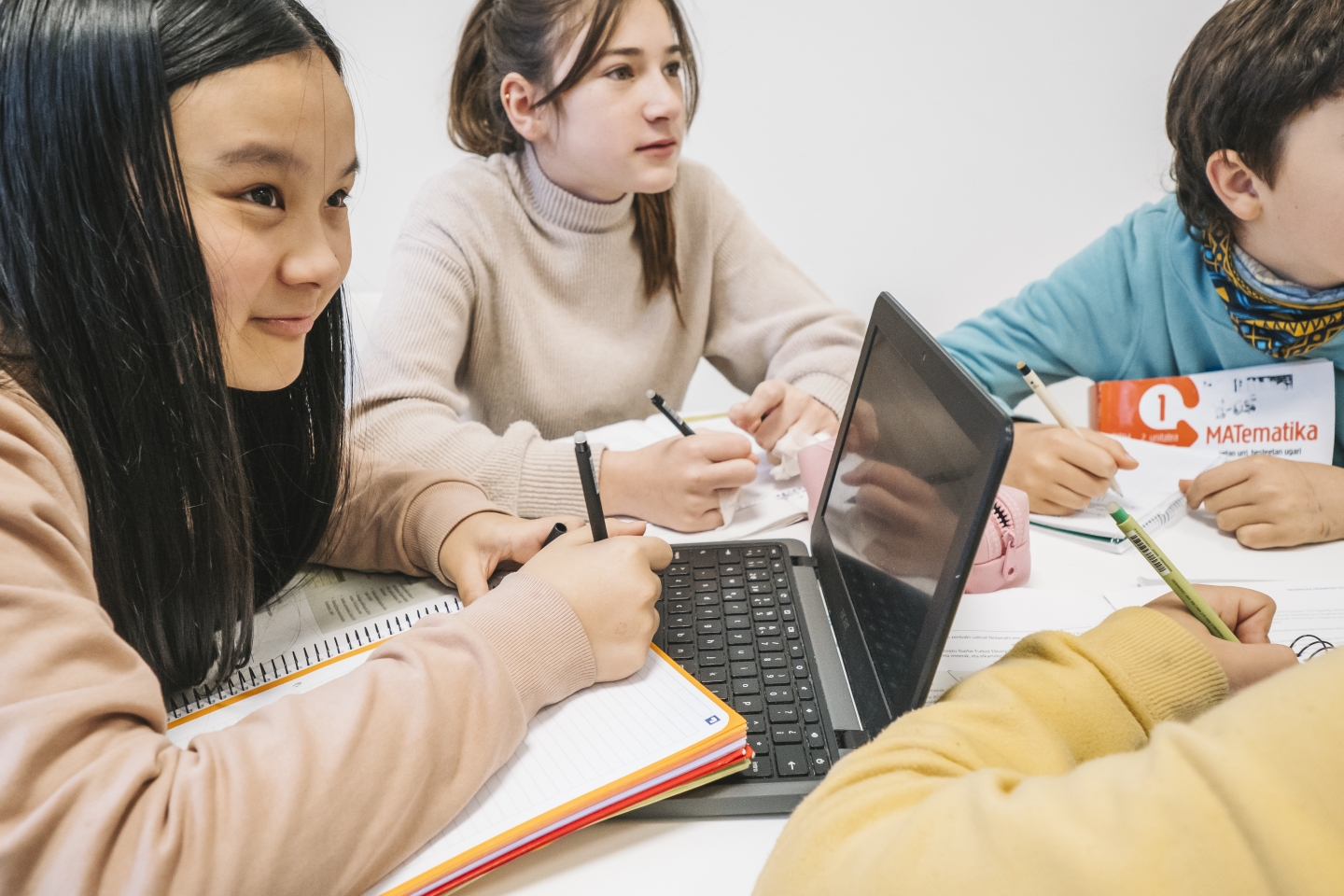
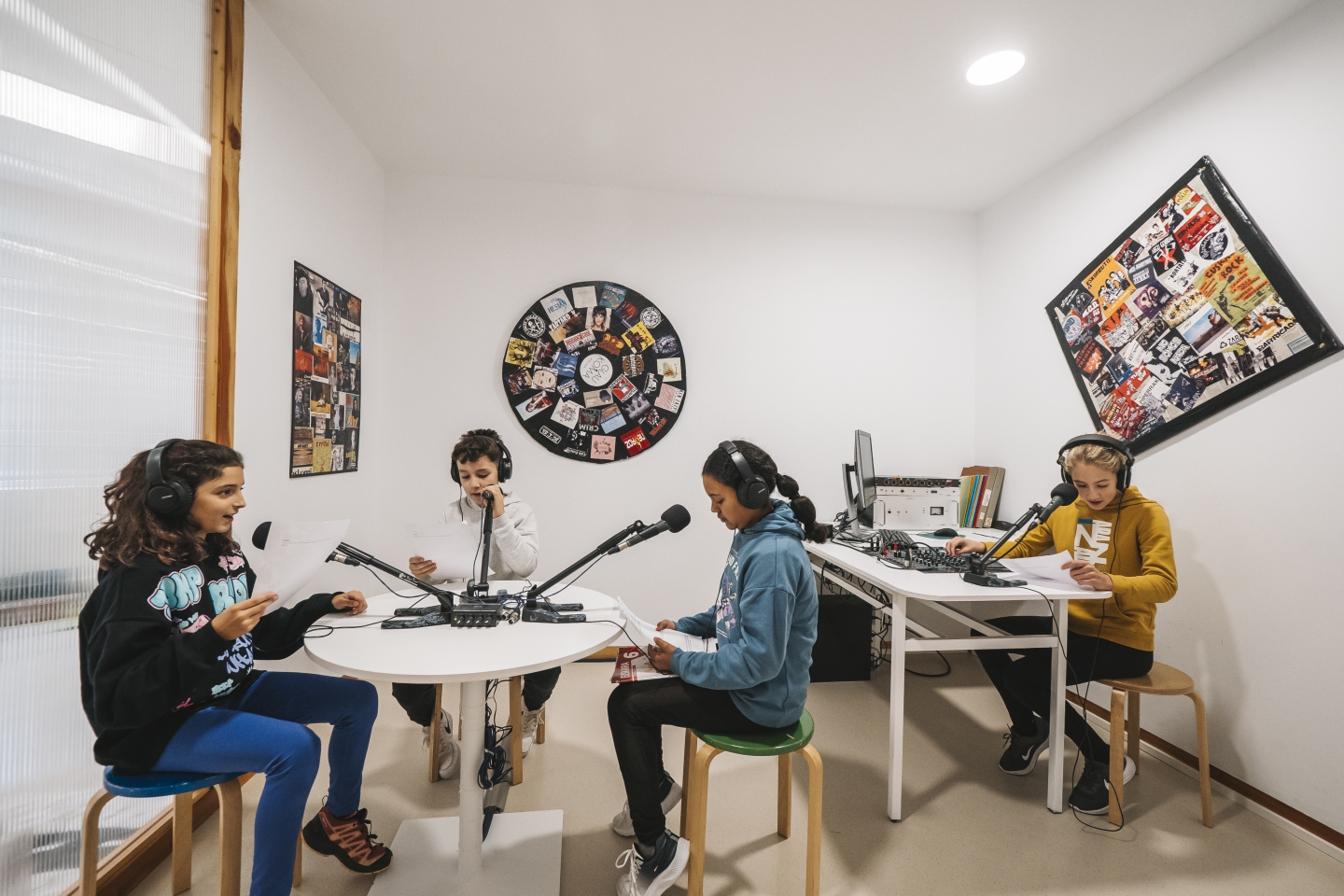
We live in a changing and complex society, and this brings new challenges in the field of education. Students’ wellbeing, personal development and socialisation require increasing attention. In this context, the ONKI programme was created: a line of work based on the new Ikastolen Tutoring Framework, as part of a comprehensive and coherent education. The ONKI programme is a powerful tool to ensure the development of inner strength, created to promote students’ wellbeing and holistic development. By building relationships based on trust, safety and health, it creates a meeting space between teachers, students and families, a space of trust for living together.
It places students’ transformation at the centre and promotes, among other things, emotional management, active listening, agreement on rules for coexistence and a sense of belonging to the group. The aim is not only to prevent bullying; it is to ensure students’ self-knowledge and social and emotional development, offering them tools for a full and balanced life. The ONKI programme is an opportunity to develop tools for a full and balanced life and to anticipate and prevent different life situations.